Nowadays, payroll systems have been transformed into software programs that can help users to complete the required processes more quickly and efficiently.
Why Should Small Businesses Invest in Payroll Software?
The payroll process feels like one of the biggest bottlenecks in running a business as it takes days to complete the entire process.
Besides, if a business is running in multiple locations or outlets, then ensuring a standard payroll process with respect to the local and regional compliance bodies becomes another challenge. Imagine how much time SME businesses have to allocate to complete the payroll process if done manually.
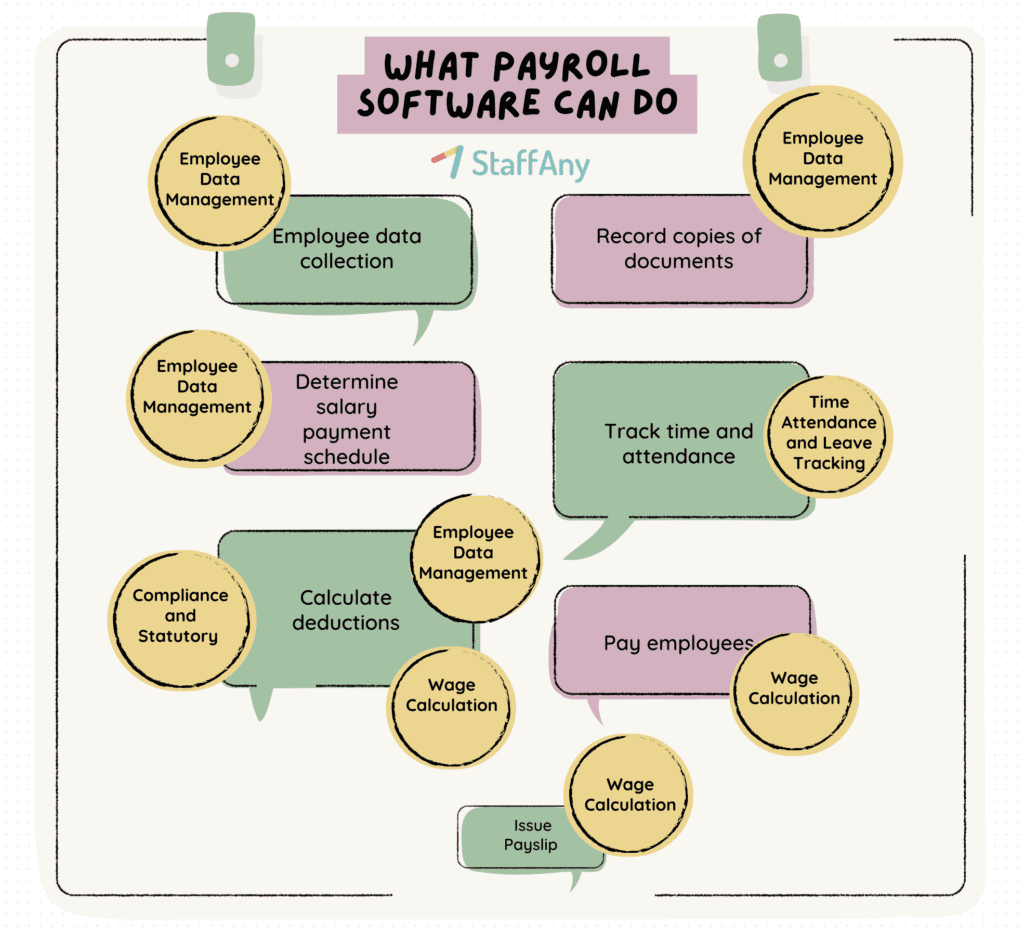
Generally, businesses dedicate numerous hours each week to handle payroll processing, the duration of which varies based on the methods and tools employed. If you break it, that time-consuming payroll process needs to go through the following critical activities.
- Employee data collection
Collecting information about employees is really important. When businesses gather accurate data about these details from their employees, it helps make sure that the deductions are fair and in line with the diverse backgrounds of the workforce.
- Record copies of documents
Keep accurate, secure employee and payroll records in a format that meets the applicable Malaysian requirements. Check retention, access and recordkeeping obligations rather than assuming physical paper files are always required.
- Determine salary payment schedule
Set a clear payroll timetable and communicate it to employees. Check the applicable wage-period and payment-deadline rules before choosing the schedule, and allow time for approvals and bank processing.
- Track time and attendance
Managing payroll and keeping track of time are closely connected. The hours they work decide how much they get paid. So, it’s necessary to have a good system to record their hours accurately. Also, don’t forget to track things like lunch breaks and time off to make sure everyone gets paid right.
- Calculate pay items and deductions
Calculate gross earnings and the Malaysian statutory deductions that apply, including employee EPF, SOCSO, EIS and PCB where relevant. Record employer contributions and levies separately. Verify each pay component and employee category before finalising net pay.
- Pay employees
Pay employees through a method permitted for the employment arrangement and location. Check employee payment details, authorisations and processing times so wages reach employees by the applicable deadline.
- Issue payslip
Provide each employee with a clear wage statement showing the relevant earnings and deductions. Have your payroll administrator confirm the required particulars, delivery method and timing under the applicable Malaysian rules.
Long story short, whether you’re just starting out or running a small chain or outlets, it’s important to have a good payroll system. Moreover, you will go through a number of lengthy processes as described above to make payroll a success.
However, hiring people to handle payroll in-house can be expensive, especially for smaller businesses with only a few employees. Hence, many SME businesses in Malaysia use payroll software to assist them in completing the payroll process.
Essential Features You Need to Look for in a Reliable Payroll Software
As the backbone of an organization’s compensation process, a capable payroll software should have a number of important elements. What are the important features of payroll software for Malaysia companies to look out for? Check the list below.
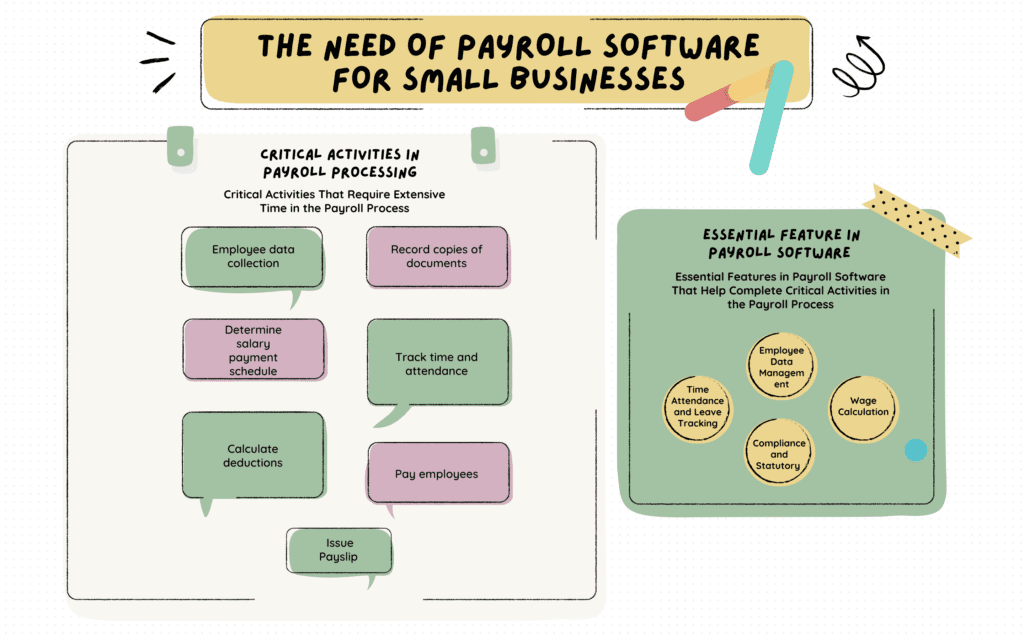
- Employee Data Management
The essence of a payroll software lies in accurately managing employee information, encompassing personal details, employment contracts, tax, and bank information. Effective data management ensures precise payroll calculations and streamlined communication with employees.
- Time Attendance and Leave Tracking
Accurately compensating employees relies on tracking work hours. The time and attendance component in a payroll system entails recording employee attendance, breaks, leave, and overtime hours. It can be accomplished through manual timesheets, time clocks, or online payroll system solutions. This precise tracking mitigates discrepancies and ensures fair payment for employees.
- Wage Calculation
Payroll software can calculate earnings and deductions using the information and rules configured for the payrun. Review employee details, attendance and calculation settings, then check the results before approving payroll.
Review how the software handles each required pay item, including salary, allowances and overtime. Confirm the applicable Malaysian treatment and configuration for incomplete months, rest days and public holidays rather than relying on a generic multiplier.
- Compliance and Statutory
Ensuring compliance with legal and regulatory standards is a crucial aspect of effective payroll software. It needs to be aligned with labor laws, regulations, and data protection laws, incorporating security measures to protect sensitive employee information and prevent unauthorized access. Adherence to these regulations not only shields the organization from legal consequences but also fosters trust with employees.
Who Are The Leading Providers Of Payroll Software For Small Businesses?
After learning what criteria to look at in determining a reliable payroll software, you may ask who are the leading providers of payroll systems for small businesses? PayrollAny from StaffAny is one of the payroll software that supports small business operations, especially startups that focus on the F&B industry.
PayrollAny connects scheduling and timesheet information with payroll preparation. Use the Malaysia workflow to review pay items and payroll totals before finalising and preparing the relevant outputs.
In summary, using a payroll software like PayrollAny ensures accurate and timely payment of salaries, helps with tax calculations and compliance, and contributes to overall cost savings. Small businesses can then focus more on growth and less on administrative tasks.